May 21 2026 | theoutcastcollective
Cultural competence is no longer a “good-to-have” skill. It has become essential for building workplaces that are inclusive, compliant, and high-performing.
Today, organisations work with people from different cultural backgrounds every day, employees, clients, partners, and communities. In this environment, the ability to understand, respect, and adapt across cultures directly impacts trust, teamwork, and overall performance.
When organisations ignore this, gaps start to show, miscommunication, bias, and lack of belonging. But when they invest in cultural competence, those same differences become a strength.
What Cultural Competence Really Means
At its core, cultural competence is simple.
It is the ability to:
- Understand different cultural backgrounds
- Respect differences without judgment
- Engage effectively with people who think and act differently
It’s not about knowing everything about every culture. It’s about being aware, open, and willing to learn.
How Cultural Competence Strengthens DEI Outcomes
Cultural competence plays a direct role in improving diversity, equity, and inclusion efforts.
Here’s how:
1. It challenges bias
When people become more culturally aware, they start recognising their own biases. This helps reduce prejudice, stereotypes, and everyday microaggressions.
2. It improves collaboration
Different perspectives lead to better problem-solving. Teams that understand each other work better together.
3. It builds stronger teams
Inclusive teams are more creative, innovative, and motivated. People feel safer sharing ideas when they feel respected.
What Organisations Should Focus On
To build cultural competence, organisations need to take intentional steps:
- Communicate clearly across different cultural contexts
- Recognise and challenge both personal and system-level biases
- Create safe spaces where people feel respected and heard
- Reduce stereotypes, conflicts, and exclusionary behaviour
- Embed inclusive practices through policies, training, and leadership
This is not just an HR initiative, it has to be part of how the organisation operates daily.
Psychological safety isn’t built through silence, politeness, or avoiding discomfort.
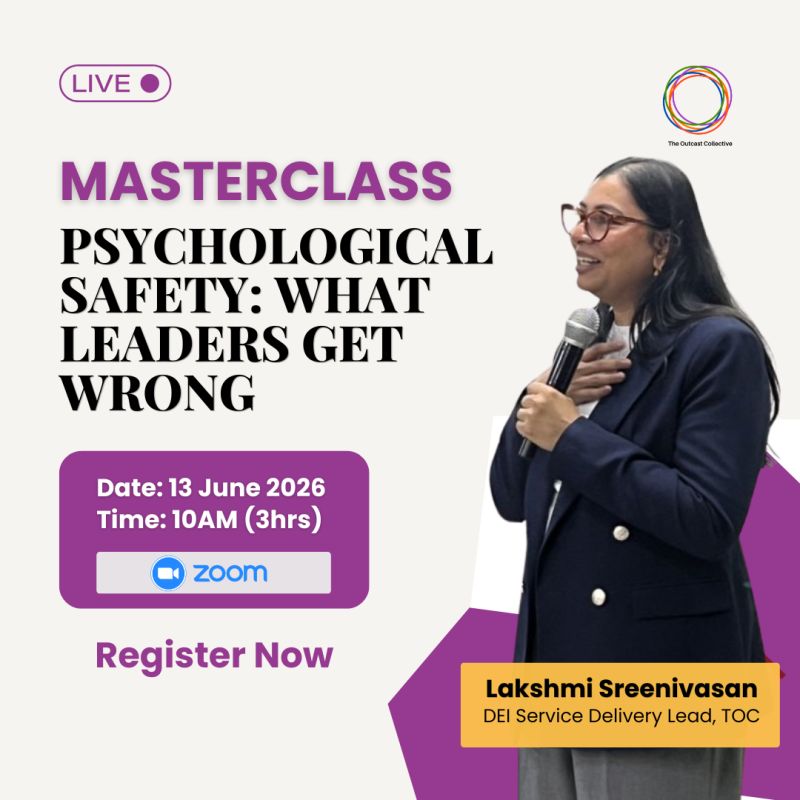
It’s built when people feel safe enough to speak honestly, challenge ideas, ask questions, and still belong. In this live masterclass, we unpack the leadership behaviours that unintentionally shut people down and what truly creates trust at work.
If you work in HR, L&D, DEI, people management, or leadership development, this conversation is for you.
Saturday, 13 June 2026
Live on Zoom on 10A.M. (3 hours)
Register now and rethink what “safe workplaces” really mean
https://bit.ly/4dqTJIs
See you there!
What Individuals Can Do
Cultural competence is not only an organisational responsibility. Individuals play a big role too.
- Listen without assumptions
- Be open to different perspectives
- Reflect on personal biases
- Show respect in everyday interactions
Small actions at an individual level create a big impact over time.
Real Impact: What This Looks Like in Practice
It’s easy to talk about cultural competence, but the real value comes from how it works in real organisations.
- Better communication across departments and regions
- Reduced workplace conflicts and misunderstandings
- Higher employee engagement and retention
- Stronger collaboration and innovation
If you want to see how this translates into actual workplace outcomes, you can Explore Case Studies on Cultural Competence & DEI here:
These case studies show how organisations have moved from awareness to action, and what changed because of it.
It’s a Continuous Journey
One important thing to understand, cultural competence is not a one-time training.
It is an ongoing process of:
- Learning
- Self-reflection
- Behaviour change
Organisations should regularly assess where they stand, identify gaps, and continue building awareness across teams.
The Real Outcome
- People feel heard, respected, and valued
- Collaboration improves naturally
- Workplace conflicts reduce
- Diversity turns into a real advantage, not just a metric
It helps create a culture of belonging, where people don’t just work, they feel they belong.
Final Thought
Cultural competence transforms workplaces.
It shifts organisations from just “having diversity” to actually making it work.
Take the first step today. Schedule an exploratory consultation via WhatsApp at +91-9372177748 or email lakshmi@theoutcastcollective.com with our DEI experts and start building a workplace where everyone belongs.