Jul 22 2026 | theoutcastcollective
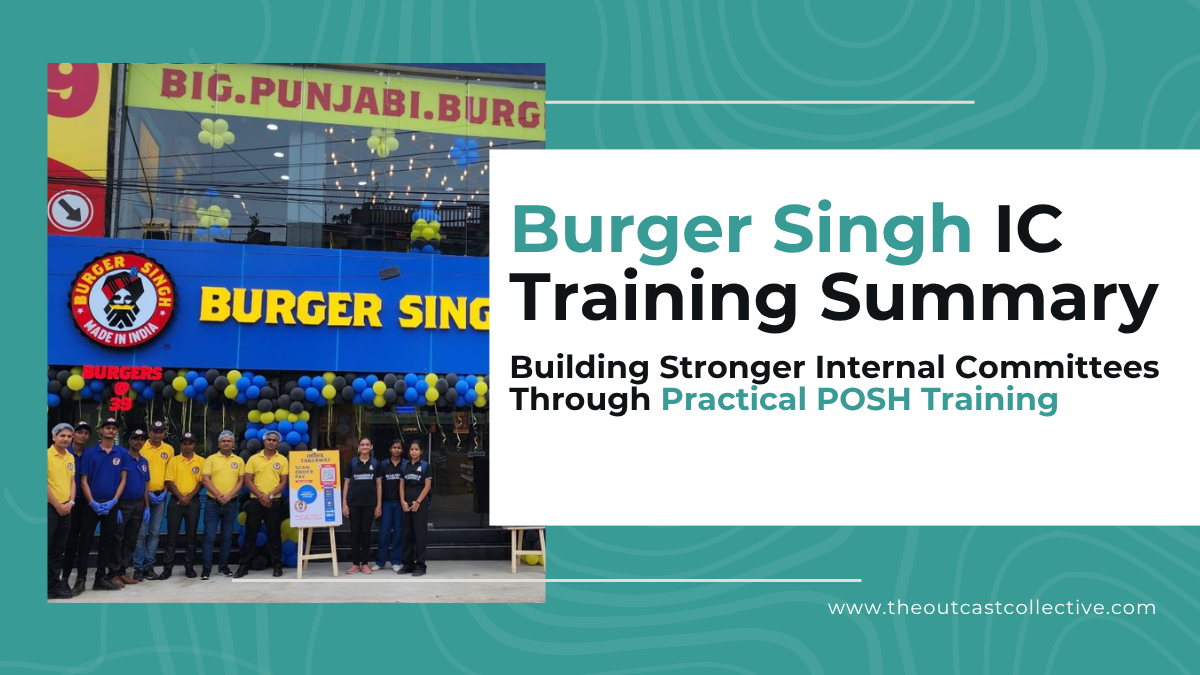
Creating a safe and respectful workplace requires more than having a POSH policy in place. It requires Internal Committee (IC) members to understand their responsibilities, conduct fair investigations, and confidently handle workplace concerns. To support this, The Outcast Collective conducted an Internal Committee (IC) Training Workshop for the Burger Singh team, designed to strengthen the committee’s understanding of the POSH Act and prepare them for real workplace situations.
The workshop combined legal guidance with practical discussions, helping participants understand not only what the law says but also how to apply it in day-to-day workplace scenarios. Throughout the session, participants actively engaged with questions, case studies, and examples that reflected the challenges organisations often face while handling workplace complaints.
Understanding the Scope of the Workplace
One of the first topics discussed during the session was the definition of a workplace under the POSH Act. While many people associate the workplace only with office premises, the discussion highlighted that the law recognises a much broader scope. Participants learned that workplace protection extends to office buildings, common areas, company events, offsite meetings, work-related travel, digital communication platforms, and other environments connected to employment.
The session also explored situations involving shared office spaces, employees interacting with people from different organisations, and complaints arising outside traditional office settings. These conversations helped participants understand how workplace boundaries continue to evolve alongside modern ways of working.
Building Confidence in Internal Committee Responsibilities
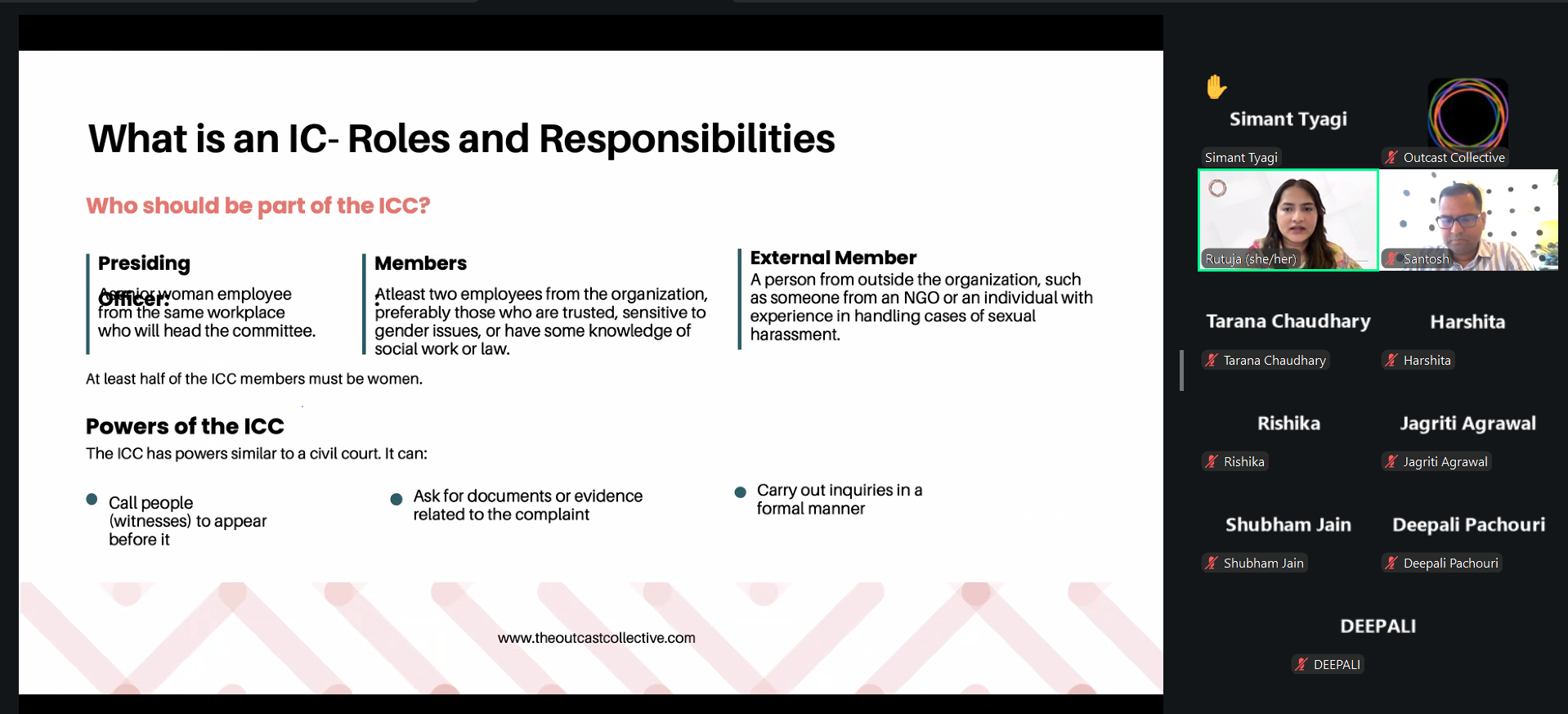
The workshop focused on the important role that Internal Committee members play in creating trust within an organisation. Participants were guided through every stage of the complaint process, beginning with receiving a complaint and continuing through inquiry, documentation, evidence review, and recommendations.
Special emphasis was placed on maintaining confidentiality, avoiding bias, treating all parties with dignity, and ensuring every inquiry follows the principles of natural justice. The discussion reinforced that IC members are expected to remain impartial and make decisions based on facts and evidence rather than assumptions or personal opinions.
Learning Through Real Workplace Scenarios
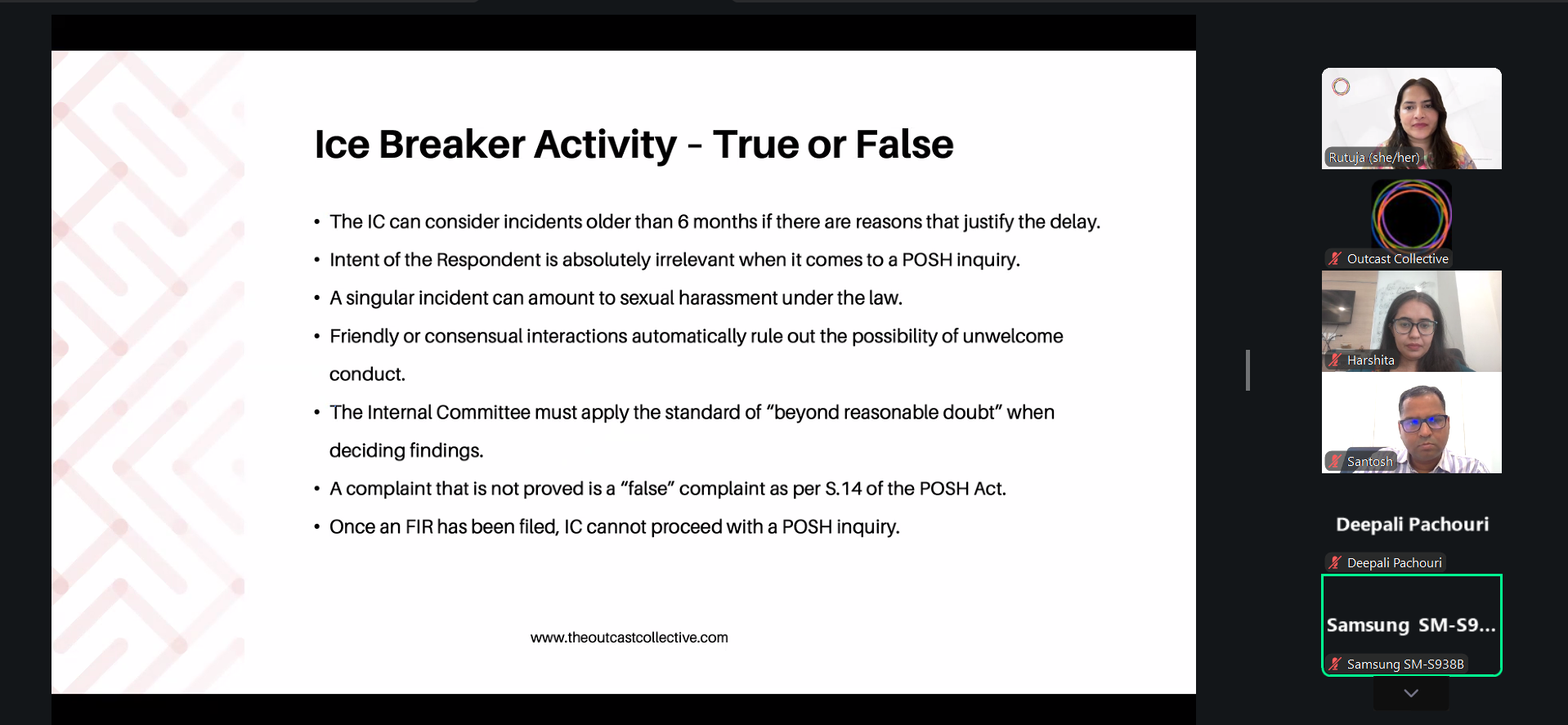
Rather than focusing only on legal provisions, the session encouraged participants to think through realistic workplace situations. Discussions included cases involving employees from different organisations, workplace relationships, reporting structures, power dynamics, social media interactions, and third-party vendors.
These practical conversations helped participants understand that every workplace concern requires careful evaluation of context, facts, and available evidence before arriving at a conclusion. The case-based learning format allowed attendees to discuss different perspectives while understanding the responsibilities of the Internal Committee.
Ethics and Fairness During Workplace Investigations
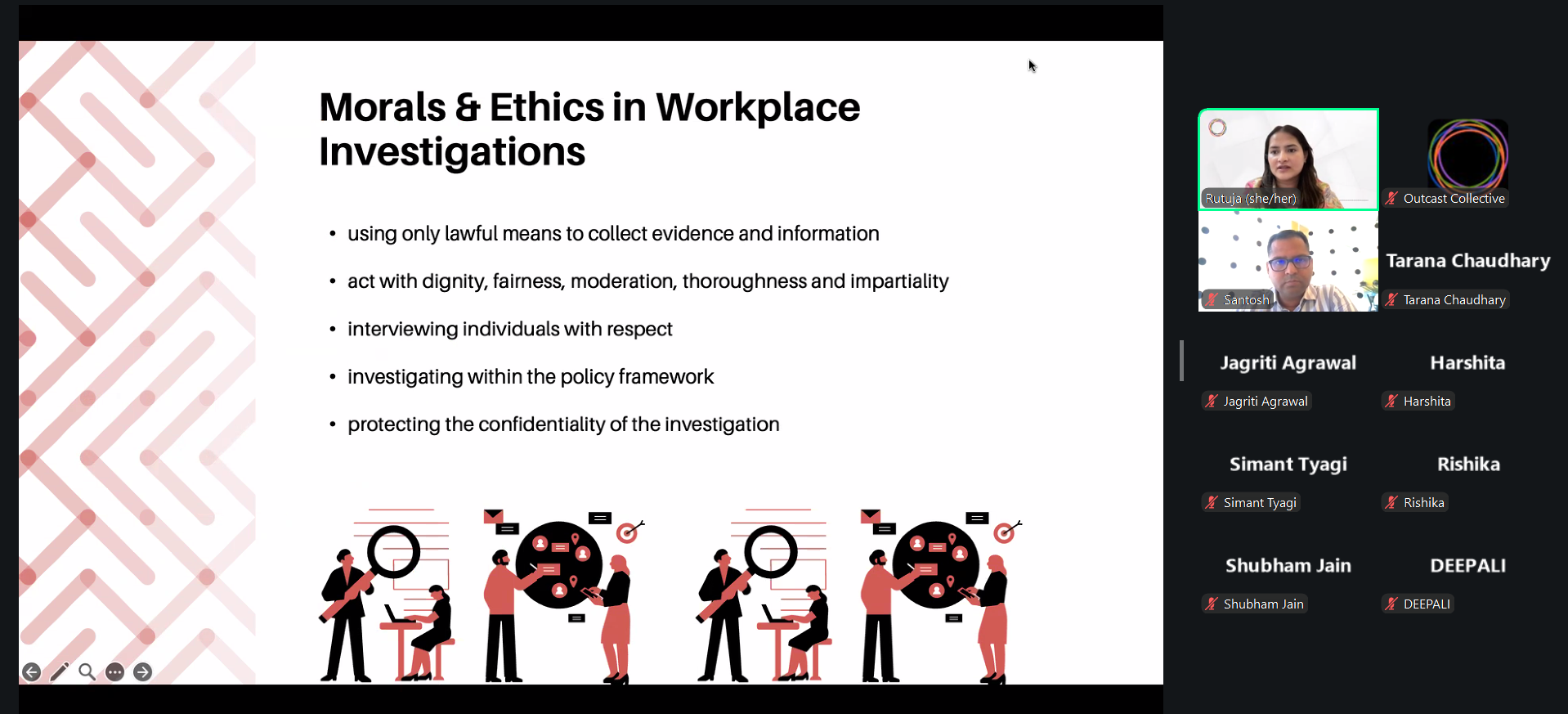
A dedicated part of the workshop focused on conducting ethical workplace investigations. Participants discussed the importance of collecting evidence through lawful means, interviewing individuals respectfully, maintaining confidentiality throughout the inquiry, and working within the organisation’s policy framework.
The session highlighted that every investigation should be conducted with fairness, impartiality, moderation, and thoroughness. These principles ensure that all parties involved are treated with dignity while maintaining confidence in the inquiry process.
Understanding Impact Alongside Intent
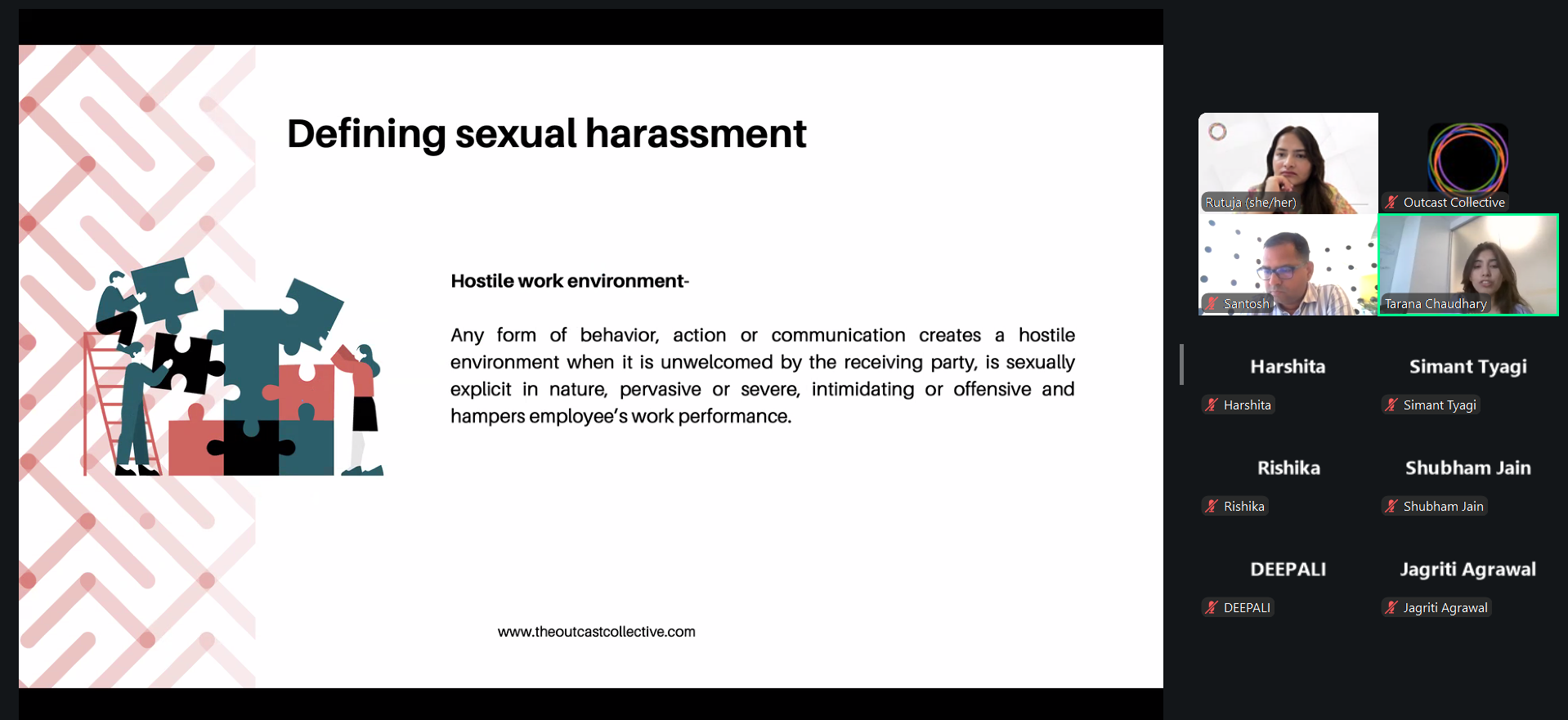
Participants also explored how workplace behaviour is assessed under the POSH framework. Through multiple examples, the workshop explained that understanding the impact of behaviour is just as important as evaluating the behaviour itself. Discussions covered verbal, non-verbal, digital, and workplace interactions, helping participants understand how different situations should be approached thoughtfully and fairly.
The workshop encouraged committee members to evaluate complaints objectively, considering organisational policies, available evidence, and the overall context before making recommendations.
Creating Safer and More Inclusive Workplaces
The Burger Singh IC Training concluded with a strong focus on continuous learning and preparedness. While policies provide the legal framework, it is informed and well-trained Internal Committee members who ensure that employees feel safe, respected, and heard.
Through practical discussions, real-life examples, and interactive learning, the workshop strengthened the participants’ understanding of POSH compliance and workplace investigations. The Outcast Collective continues to partner with organisations across industries to build safer, more inclusive workplaces through POSH training, Internal Committee capacity building, workplace investigations, and workplace culture programmes.
Workshop Details
Client: Burger Singh
Workshop: Internal Committee (IC) Training on POSH Compliance
Conducted by: The Outcast Collective
Workshop Gallery
Take the first step today. Schedule an exploratory consultation via WhatsApp at +91 8928021419 or email rutuja@theoutcastcollective.com with our POSH experts and start building a workplace where everyone belongs.