Dec 23 2025 | theoutcastcollective
This document summarises key insights from the TOC webinar on “Strengthening POSH IC – Practical Skills for Effective Inquiries.” The session focused on enhancing the effectiveness of Internal Committees (ICs) under the POSH Act by strengthening their procedural and behavioural capabilities. To prevent POSH cases and ensure the IC is fully prepared, it is crucial to build strong employee awareness and clarity around the process. The webinar highlighted the importance of addressing technical gaps, reinforcing fair and timely inquiry practices, and ensuring that all proceedings remain legally compliant and transparent.
This webinar was structured into three key stages- Pre-Inquiry, During Inquiry, and Post-Inquiry, highlighting how the IC should function at each step. Across all three stages, the focus remains on making the process safe, transparent, and trustworthy. From preparing the IC and setting clear expectations, to conducting a fair and unbiased inquiry, and finally ensuring proper communication and follow-through, each stage plays a crucial role in strengthening confidence in the system and fostering a safer workplace for all.
Pre-inquiry Stage
Pre-Inquiry Considerations and Deciding the Quorum:
When constituting the Internal Committee (IC), ensure all legal requirements are met and select members who display empathy, neutrality, and sound judgment. The IC should have people with diverse identity or background to allow for multiple perspectives. It must be ensured that the quorum is maintained in every meeting, with the Presiding Officer and External Member always present. While deciding the quorum, one must ensure that it does not have more than 5-6 IC members as it can be intimidating for the parties involved.
The IC should also be trained and prepared on procedures, timelines, and documentation standards before the inquiry begins to ensure consistency and compliance. Moreover, all proceedings must be carefully documented through minutes, reports, and recordings to ensure transparency and support the organisation in case of legal scrutiny. Roles must be assigned prior to the inquiry on who will be in-charge of documentation, making MoMs, recording proceedings etc.
Addressing Bias:
IC members must be mindful of unconscious biases that may influence inquiry outcomes. Any IC member with a conflict of interest, such as a personal relationship with a party, should recuse themselves of that particular case. It is essential to build trust amongst the parties and in the system, and maintain independence from any biased decision or recommendation.
In cases involving senior professionals, leaders, or individuals with significant influence, hierarchical bias may unintentionally come into play. Similarly, when the respondent is a high-performing or strategically valuable employee, the IC must be especially vigilant in ensuring that decisions remain fair, unbiased, and based solely on evidence. The IC must uphold transparency, objectivity, and neutrality throughout the inquiry process. It is also essential to clearly distinguish the roles of the IC, HR, and management so that responsibilities are well defined, confidentiality is maintained, and the process is carried out properly and without interference
During Inquiry Stage
Secure Communication:
Ensure that all communication channels used during the inquiry are secure. Avoid using AI tools or external platforms that may compromise confidentiality by storing sensitive names, documents, or case details. All information should remain within protected organisational systems.
Confidentiality:
Maintaining confidentiality is critical. The first step should be executing Non-Disclosure Agreements (NDAs) with all individuals involved in the inquiry. This will ensure that personal and case-related information is disclosed strictly on a need-to-know basis.
Proper Documentation and Record-Keeping:
Document every stage of the process through detailed Minutes of Meeting (MoM), notices, acknowledgements, and inquiry records. Use standard templates wherever possible to maintain consistency. Share notices through both email and hard copy when required, get an acknowledgement on each document, and store all documents through secure and approved channels.
Managing Emotions and IC Well-being:
IC fatigue is quite common, where the IC members may experience emotional fatigue, stress, or triggers during the inquiry process. It is important to acknowledge this and create space for debriefing, support, and emotional regulation. Similarly, be sensitive to the emotional state of the complainant, respondent, and witnesses.
Gathering and Securing Evidence:
Collect evidence meticulously, including interview recordings, verbatim transcripts, CCTV footage, digital communications, and relevant documents. Ensure strict access control for both physical and digital evidence. Follow disciplined documentation practices and safeguard all data in secure storage systems.
Post-Inquiry Stage
Communicating the Outcome:
While parties may disagree with the IC’s recommendations, what they will always remember is how they were treated during the process. It is essential to communicate the outcome with equal respect, neutrality, and sensitivity to both the complainant and respondent. Clearly explain the possible outcomes, the reasoning, and the next steps in the process so that expectations are well managed.
Drafting Clear and Reasoned Findings:
Based on the evidence and testimonies gathered, the IC must prepare a clear, detailed, and reasoned report. This report should demonstrate that due process was followed, the inquiry was unbiased, and the conclusions are supported by evidence. Such documentation is crucial if the findings are ever challenged legally.
Implementing Recommendations:
Each inquiry provides unique insights and learnings. After the report is submitted, the IC should ensure that management implements the recommendations within the required timelines. Follow-up is essential to confirm that actions are taken appropriately and that commitments made during the process are fulfilled.
Preventing Retaliation:
It is important to monitor for any form of retaliation, whether intentional or unconscious, against any party involved in the inquiry. The organisation must create safeguards to ensure that no one faces repercussions for participating in the process.
Post-Closure Report and Follow-Up:
Once the recommendations are implemented, the IC should prepare a post-closure report documenting actions taken, compliance status, and any legal requirements fulfilled. Additionally, be mindful of the psychological and emotional impact the inquiry may have had on any party, and guide them towards support resources if needed.
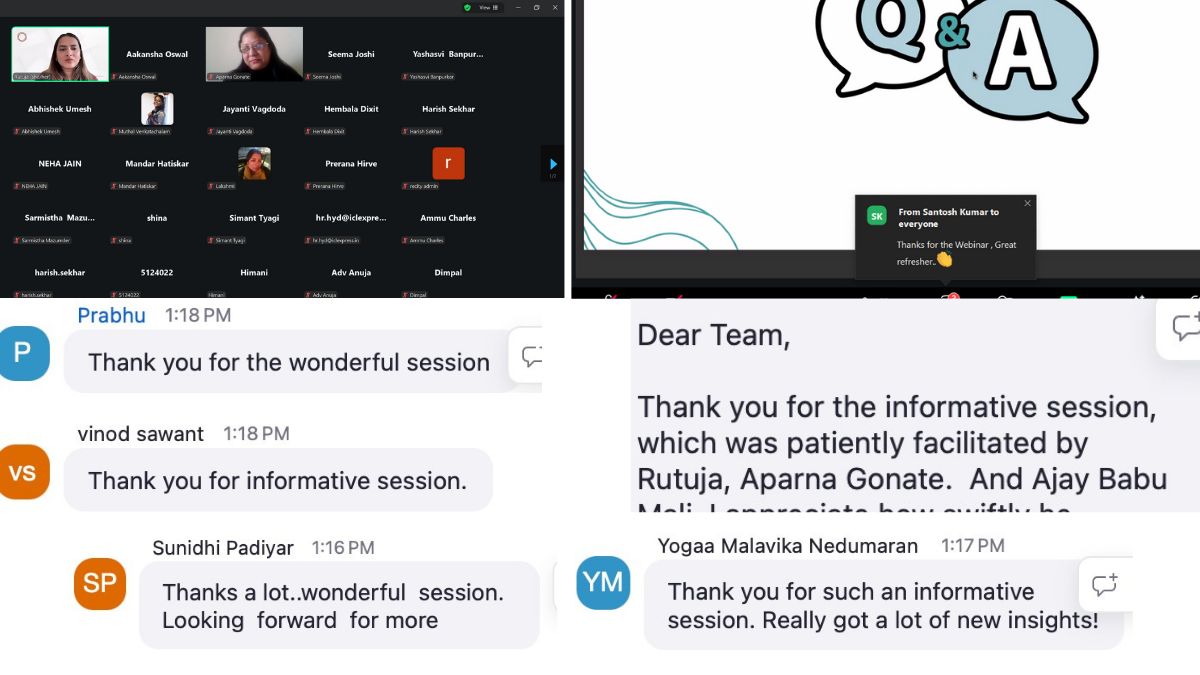
Webinar Highlights
Frequently Asked Questions (FAQ)
1. How do we document the list of IC members? Is it verbal?
The list of IC members must be formally documented. A board resolution is issued, circulated via email, and acknowledged by members. The IC composition must also be displayed on notice boards and shared with employees. Additionally, it must be included in the Annual IC Report submitted to the Ministry of Women and Child Development before 31st January for the previous calendar year.
2. Should the IC include members from the queer community?
Yes. ICs should be as diverse as possible, ensuring representation and inclusive perspectives. Involving queer community members or any other individual from marginalised groups in the process strengthens trust, safety, and sensitivity.
3. Can an HR member be part of the IC, or must it be a non-HR employee?
Yes, HR members can be part of the IC. However, it is suggested that IC members are not from HR, as conflicts may arise. HR typically supports the administrative process and it could give an impression that it could influence IC decisions.
4. Can male IC members be excluded during the initial stages for female employees’ comfort?
Temporarily adjusting presence for comfort is acceptable during sensitive interactions (e.g., initial meetings). However, the inquiry itself must follow POSH norms and quorum requirements of gender balance, including mandatory members such as the Presiding Officer and External Member.
5. Is it the External Member’s duty to constitute the IC?
No. Constituting the IC is the employer’s responsibility. The external member is mandatory but does not select or appoint the IC.
6. Is there a minimum quorum required for inquiry meetings?
Yes. A minimum of three IC members must be present, including:
One External Member, and
The Presiding Officer.
7. How many times must the IC meet in a year?
Ideally, the IC should meet once every quarter. By law, at least one meeting per year is required, along with an awareness session for employees.
8. Who is responsible for recording minutes and coordinating meetings?
One designated IC member records minutes, maintains documentation, and stores evidence securely. After case closure, these records are handed over to HR, while ensuring strict confidentiality throughout the process.
9. . Is there a standard inquiry form or format?
There is no official standard format. However, inquiry documentation must be clear, detailed, neutral, and easy to understand. It should capture all critical facts, timelines, statements, and findings.
10. Does the external member have to be a lawyer?
Not necessarily. The external member can be a POSH expert, NGO representative, social worker, or legal professional. The key requirement is experience in women’s rights, social work, or handling sexual harassment matters.
11. Can an IC member be asked to step aside if bias becomes evident?
Yes. If a member displays bias or conflict of interest, they should recuse themselves. A replacement should be appointed as per the POSH Act’s requirements.
12. Should inquiry steps be conducted outside office premises for confidentiality?
This is not mandatory. Inquiries can be conducted onsite as long as privacy and confidentiality are maintained. If required, offsite meetings may be arranged for sensitive cases.
13. Can one central IC serve multiple locations?
Each entity must have an IC. While central ICs may be used when smaller locations lack senior or trained staff, it is advisable to have location-specific ICs for better context and accessibility. Organisations should also plan for succession and training of future IC members.
14. Are discussions with a counsellor confidential?
Yes. Whether the counsellor is internal or external, therapists are legally bound by client confidentiality.
15. Can an inquiry meeting be held if all IC members are not available?
Yes, as long as the mandatory quorum of three members is met, including the Presiding Officer and External Member.
16. What happens if management fails to implement IC recommendations?
The aggrieved party can pursue legal remedies. Additionally, the IC can follow up as part of compliance monitoring to ensure timely action.
Take the first step today, Schedule an exploratory consulting via E-mail rutuja@theoutcastcollective.com with our DEI experts and start building a workplace where everyone belongs.